
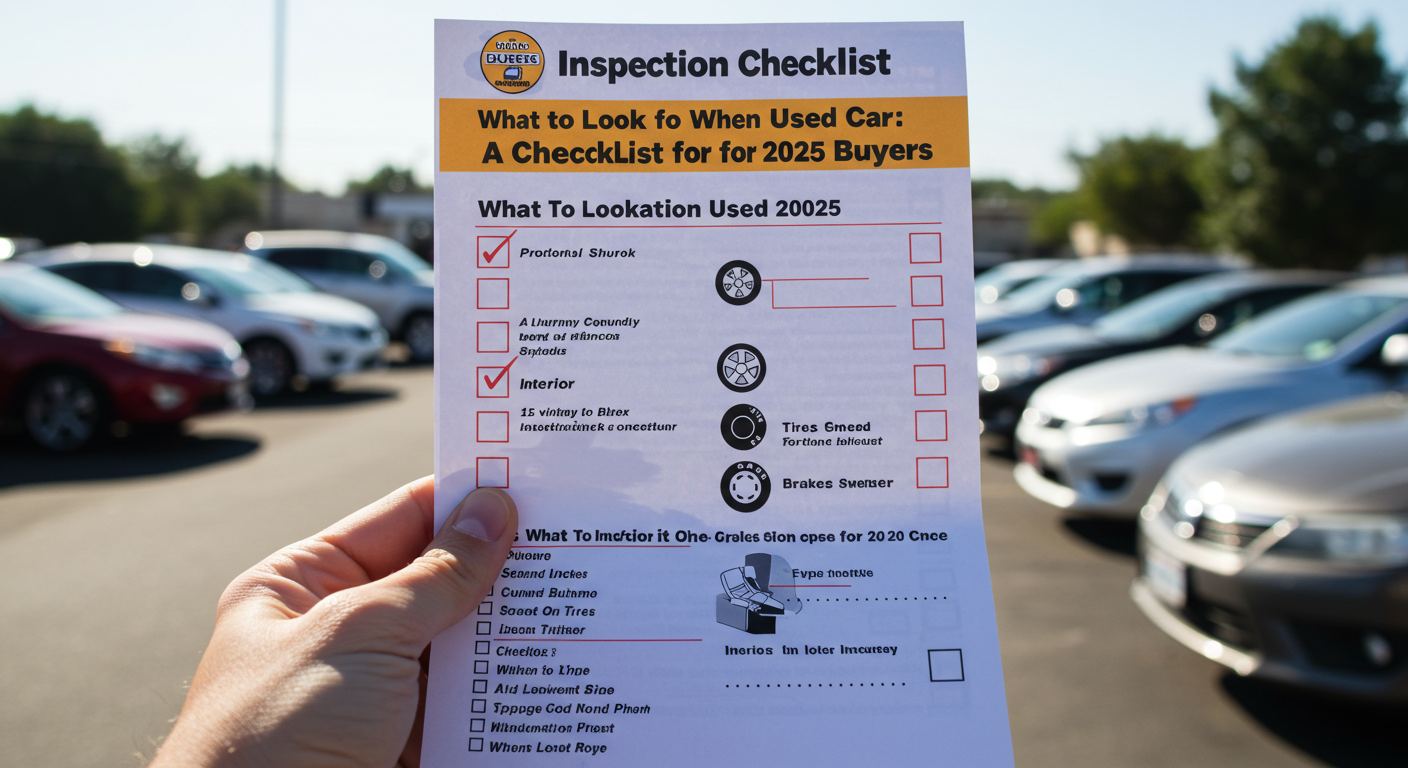
I’ve bought 11 cars in my life—eight used, three new—and I’ve made almost every mistake in the book. I’ve been the guy who fell in love with a shiny red Mustang at dusk and drove it home without ever popping the hood. I’ve also been the guy who spent three weeks researching a Honda Civic like it was a PhD thesis and still missed a $3,800 transmission issue that the seller “forgot” to mention.
After spending well over $250,000 on vehicles (and thousands more fixing avoidable problems), I finally learned what actually matters. This guide is the one I wish existed when I was 22 and broke. If you’re about to drop five figures (or six) on your next ride, read this first. Even if you only catch one hidden issue, you’ll save thousands.
Why Most “Car Buying Checklists” Are Useless (And What This One Does Differently)
Google is full of 800-word lists that say “check the tires” and “take it for a test drive.” Cute. Those lists were written by people who’ve never had a shop quote them $4,200 for a timing belt and water pump “while we’re in there.”
This guide is different because:
- I still own six of the cars I’ve bought (so I live with my decisions).
- I’ve paid for six pre-purchase inspections (PPIs) and learned exactly what good inspectors look for.
- I’ve bought privately, from dealers, at auctions, and sight-unseen across state lines.
- I’ll show you how to spot the stuff that doesn’t show up on Carfax.
Let’s get into the real things to check before buying a car—new or used.
Phase 1: Before You Even See the Car In Person
1. Run Every Report Known to Man (Yes, All of Them)
- Carfax (good for accidents and title issues, terrible for odometer fraud or flood cars that were never claimed).
- AutoCheck (sometimes catches stuff Carfax misses).
- NICB VINCheck (free stolen-vehicle check).
- NMVTIS report (the only federally mandated report—$5 well spent).
- EpicVIN or VinAudit (cheaper alternatives that often pull more auction data).
Pro tip: If the seller only offers a Carfax and gets defensive when you ask for the VIN early, walk away.
2. Decode the VIN Yourself
Don’t trust the ad. Pull up the Monroney label (window sticker) reconstruction on sites like monroneylabels.com or use Chrysler/Dodge/Jeep/Ram’s own window sticker tool. I once almost bought a “Limited” trim that was actually a base model with $4,000 in stick-on fake wood.
3. Check for Open Recalls—Twice
Use NHTSA.gov and the manufacturer’s own site. I bought a 2018 Subaru with an open Takata airbag recall the dealer “forgot” about. Six months of waiting for parts was not fun.
4. Research Common Problems for That Exact Model Year
Not just the model— the exact year. A 2016 Honda CR-V is fine. A 2015 with the 2.4L Earth Dreams engine will drink oil like a frat boy drinks Natty Light. Forums like BobIsTheOilGuy, Reddit’s r/whatcarshouldIbuy, and model-specific Facebook groups are gold.
Phase 2: The First In-Person Visit (Bring These Tools)
I keep a $40 Amazon “car buying kit” in my trunk at all times:
- OBD2 scanner (BlueDriver or cheap ELM327)
- Paint thickness gauge ($25 on Amazon—catches bondo like magic)
- Flashlight + telescoping mirror
- Tread depth gauge
- White cloth and magnet
- Phone with torque app (for live data)
5. Exterior Red Flags Most People Miss
- Panel gaps: Walk around with your phone at bumper height. Uneven gaps = previous wreck.
- Paint meter: Anything over 300-400 microns on a steel panel usually means filler.
- Overspray on rubber seals or inside the trunk lid = cheap respray.
- Mismatched tire brands or dates: Someone cheaped out after curb rash or a blowout.
6. Undercarriage Inspection (The Money Saver)
Jack the car up (or crawl under if it’s on a lift). Look for:
- Fresh undercoating sprayed over rust (dealers do this all the time in the Rust Belt).
- Welds or creases in frame rails.
- Oil leaks that are shiny black but have a perfect circle of clean metal under them (someone just cleaned it with brake cleaner 10 minutes ago).
7. Interior Smells and Signs Nobody Talks About
- Cigarette smoke that’s been masked with an ozone machine (it comes back in summer).
- Dog smell that’s permanent.
- Mildew under seats = flood car 9 times out of 10.
- Seat bolster wear vs. odometer: 80k miles with seats worn through to the foam? Odometer rollback city.
Phase 3: The Test Drive Most People Botch
8. The 30-Minute Route You Must Drive
Don’t do the dealer’s 5-minute loop. Drive:
- 10 minutes of highway (turbo lag? transmission slip? death wobble?)
- 10 minutes of stop-and-go (brake pulsation, AC performance)
- 10 minutes with radio off and windows up (listen for rod knock, timing chain rattle, wheel bearings)
Cold start it if possible. A car that smokes for 30 seconds on startup but clears up? That’s valve stem seals—$2,000+ on many engines.
9. The Tests Mechanics Actually Do
- Hard acceleration in 2nd gear (listen for pinging or transmission flare).
- Brake hard from 50 mph (ABS chatter or pulling?).
- Turn the wheel lock-to-lock while stopped (power steering whine or clunk?).
- Drive over speed bumps diagonally (listen for broken sway bar links).
Phase 4: The Pre-Purchase Inspection (PPI)—Non-Negotiable
10. Never Skip This (Even on “Certified” Cars)
I once bought a CPO BMW that the dealer swore was perfect. My indie shop found $9,400 in deferred maintenance in 45 minutes. Pay the $150–$250. Choose the shop yourself—never let the seller pick.
What a good PPI includes:
- Compression/leakdown test
- Bore scope of cylinders (if history is questionable)
- Full scan for codes (including ABS/airbag modules)
- Lift inspection with photos
Phase 5: Specific Things to Check by Powertrain Type
Diesel Engines
- DPF/DEF system status. A deleted truck might save you $2k short-term but cost you the ability to register it in half the states.
- Blow-by test: Pull the oil cap while idling. Excessive smoke = tired rings.
Turbo Cars
- Pull the intake pipe. Oil in the intercooler piping is normal. Chunks of metal? Run.
- Listen for shaft play in the turbo (grab it with the car off—should have almost zero movement).
Hybrids/EVs
- Battery health report (Toyota gives this free, Tesla charges $100).
- Charging port pins burnt? That’s a $5k+ module.
- Ask to see the last 6 months of charging history if possible.
CVTs and Dual-Clutch Transmissions
These are the new landmines. Nissan CVTs from 2013–2018, Ford Powershift, early VW DSGs—research the specific years. A $6,000 transmission at 90k miles hurts.
Phase 6: Dealer vs. Private Party—Hidden Gotchas
Buying from a Dealer
- “We recondition everything” = they put tires on it and called it a day.
- Ask for the service records from their reconditioning. 90% can’t produce them.
- Spot delivery scams are still alive in 2025—never leave without the title or a signed “we owe” that’s actually enforceable.
Private Party
- Meet at their house, not a Walmart parking lot.
- Title in hand? If it’s still at the bank, budget 2–3 weeks for payoff drama.
- Cashier’s check scams go both ways—use escrow services like Escrow.com for high-dollar or out-of-state deals.

Phase 7: The Final Checks Before Signing
11. Verify the Money Stuff
- Get pre-approved before shopping (dealers mark up rates 2–3% otherwise).
- Read every line of the contract. “Etch” theft protection for $1,995? Nitrogen in tires for $499? Walk.
- Gap insurance through your own insurer is usually half the dealer price.
12. Sleep On It (Seriously)
I’ve never regretted walking away for 24 hours. I’ve regretted every car I bought the same day I saw it.
The One Thing That Matters More Than Everything Above
Trust your gut. If something feels off—if the seller won’t let you take it to your mechanic, if the story keeps changing, if the car “just got detailed” and smells like a swimming pool—walk. There are literally millions of cars for sale right now.
I bought my favorite car ever (a bone-stock 2017 Mazda3 with 42,000 miles) because the 72-year-old seller handed me a three-inch binder of every receipt since new, let me keep the car for four hours to get a PPI, and cried when I picked it up because “she was like a daughter.” That’s the energy you want.
Take this checklist, save it to your phone, and don’t let excitement write a check your wallet can’t cash. Your future self (and your bank account) will thank you.
Now go buy the right car—the one you’ll still love at 150,000 miles.
Explore additional expert insights and family car guides at OnlyGamify.