
My name is Ryan Delgado. I’ve been an ASE Master Tech with L1 (Advanced Level) and MACS 609 certification since 2009. I run a small independent AC-specialty shop just north of San Antonio where summer temps regularly hit 105–110 °F for weeks on end. When your AC dies here, it’s not an inconvenience—it’s a legitimate safety issue.
I’ve seen every single failure mode there is: from the classic 2012–2016 Honda Civic compressor clutch explosions, to Ford F-150 blend-door actuators that sound like a dying squirrel, to GM trucks that leak refrigerant from the condenser seams like clockwork at 70k miles.
These are the exact car AC problem solutions I use every day in the shop—plus the ones I do on my own vehicles so I’m not stuck on I-35 in July with three kids melting in the back seat.
The 7 Most Common Car AC Problems (In the Order You’ll See Them in the Real World)
- Not cold at all (usually low refrigerant)
- Cold at highway, hot at idle (90 % of the time condenser fan or debris)
- Blows cold on one side, hot on the other (blend door or low charge)
- Intermittent cooling (expansion valve, clutch gap, or electrical)
- Smells like a gym sock or wet dog (evaporator core mold)
- Weird noises (compressor, blower motor, or blend door)
- AC works but fogs the windshield (heater core leak into evaporator case)
Let’s fix them one by one.
H2: Car AC Problem Solution #1 – “It’s Not Blowing Cold At All”
Step 1: Check the Simple Stuff First (Takes 30 Seconds)
- Clutch engaged? Look at the center of the compressor pulley while someone turns AC on MAX with engine running. The middle should spin. If it doesn’t → go to electrical section below.
- Sight glass (if your car has one): Clear with occasional bubbles when running = perfect. Constant bubbles or oily streaks = low. All foam = critically low.
Step 2: Gauge It Properly (Stop Guessing)
Buy a $49 Harbor Freight R134a manifold set and do it right. Static pressure (car off, 10 minutes) should be roughly equal to ambient temp in °F (95 °F outside ≈ 95 psi on both gauges). If it’s way lower, you have a leak.
Running pressures (engine at 1500–2000 rpm, MAX AC, doors open):
- Low side: 25–45 psi
- High side: 175–250 psi (depends on outside temp—add roughly 2.2 × ambient °F)
If low side is below 20 psi and high side is sky-high → blockage (expansion valve or orifice tube).
The Leak Hunt (What Actually Works in 2025)
Forget the $12 UV dye kits from AutoZone for big leaks. Here’s the order I use:
- Electronic sniffer around every joint and condenser (catches 95 % of leaks)
- Nitrogen pressure test to 200 psi + soap bubbles (finds the last 4 %)
- UV dye + blacklight only if the first two fail
Most common leaks I see in Texas:
- GM SUVs (2014–2019): condenser seams
- Honda CR-V & Civic (2016–2021): condenser rock damage
- Ford F-150 (2015–2020): high-side line at the condenser rub
- Toyota Camry (2012–2017): evaporator core inside the dash
H2: Car AC Problem Solution #2 – “Cold on Highway, Hot at Idle”
90 % of the time it’s airflow across the condenser.
Clean the Condenser (The One Everyone Skips)
The condenser sits in front of the radiator. Road grime, bugs, and cottonwood build up between them and block 50–70 % airflow. I pressure-wash from the front (engine side) with the fan shroud removed. Takes 15 minutes and fixes half the “hot at idle” complaints instantly.
Condenser Fan Diagnosis
- Both fans should run on high when AC is on.
- If only one runs → bad fan, relay, or resistor.
- If neither runs → check fuses, then the pressure switch on the receiver-drier.
Real case: 2019 Ram 1500 came in “barely cold at lights.” Condenser was packed solid with cottonwood. 20-minute cleaning and it dropped vent temp from 72 °F to 38 °F at idle.
H2: Car AC Problem Solution #3 – “Driver Side Hot, Passenger Side Cold”
Dual-zone cars have blend-door actuators that fail like clockwork.
The $9 Fix That Works 70 % of the Time (GM Trucks & SUVs)
2007–2013 Silverado/Sierra/Tahoe/Yukon: The driver-side blend door actuator gear strips. Remove the hush panel under the dash, unplug the bad actuator, turn the shaft by hand to full cold, then install a metal-gear Dorman 604-213 ($35). Takes 20 minutes.
Ford Flex/Explorer & F-150 (2011–2019)
The actuator is behind the radio. Pull the radio, replace with Motorcraft YH-1891. Do the relearn procedure (turn key on, set temp to 60 °F, then 90 °F five times fast).
Low Refrigerant Mimics Blend Door Issues
If you’re 15–20 % low, the passenger side will always be colder because of how the evaporator is laid out. Fix the leak and recharge first.
H2: Car AC Problem Solution #4 – Bad Odors (The Famous “Gym Sock” Smell)
You have mold growing on the evaporator core.
The Correct Way (Not the $10 Aerosol Bomb)
- Remove blower motor (5-minute job on most cars)
- Spray Frigi-Fresh or Klima-Cleaner foam directly onto the evaporator (both sides if accessible)
- Let sit 15 minutes, run blower on high with AC off for 10 minutes
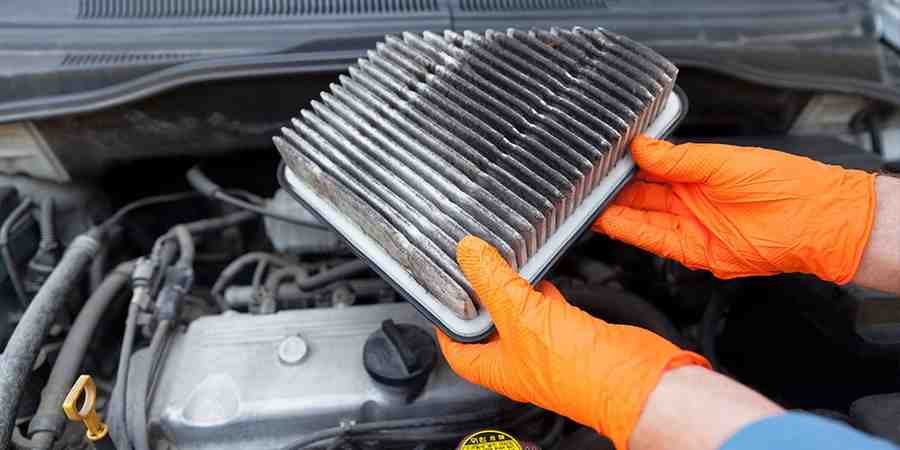
- Install an aftermarket cabin air filter if your car didn’t come with one
Do this every spring. I do it to my wife’s Expedition every March and we’ve never had the smell come back.
H2: Car AC Problem Solution #5 – Compressor Clutch Not Engaging
Quick Checks
- Jump the low-pressure switch (two-wire switch on the accumulator). If clutch engages → low refrigerant or bad switch.
- Check relay (swap with horn relay).
- Measure clutch coil resistance (should be 3.2–4.8 ohms). Zero = open coil. Infinite = bad ground.
The Infamous Honda Civic 2006–2015 Issue
The clutch coil gap opens up over time. Shim the clutch with a 0.012–0.016″ feeler gauge (three shims around the hub). Costs $2 in parts and fixes 80 % of “intermittent” Hondas.
H2: Car AC Problem Solution #6 – Weird Noises
- Squeak/squeal on startup → belt or tensioner
- Grinding/rattling → compressor internal failure (replace compressor + drier + expansion valve)
- Clicking under dash every 10 seconds → blend door actuator stripping gears
H2: The Ultimate Car AC Maintenance Schedule I Give Every Customer
| Mileage/Time | Task | Cost (DIY) | Cost (Shop) |
| Every spring | Clean condenser + cabin filter | $20 | $120 |
| Every 2 years | Replace cabin air filter + evaporator treatment | $40 | $180 |
| Every 4–5 years | Replace receiver-drier/accumulator when system is opened | $35 | $250+ |
| Every 60–80k miles | Replace expansion valve/orifice tube (while you’re in there) | $25 | $400+ |
| Every 100k+ miles | Consider compressor if original (preventative) | – | $1,200–2,200 |
Tools Every American Driver Should Own for AC Diagnosis
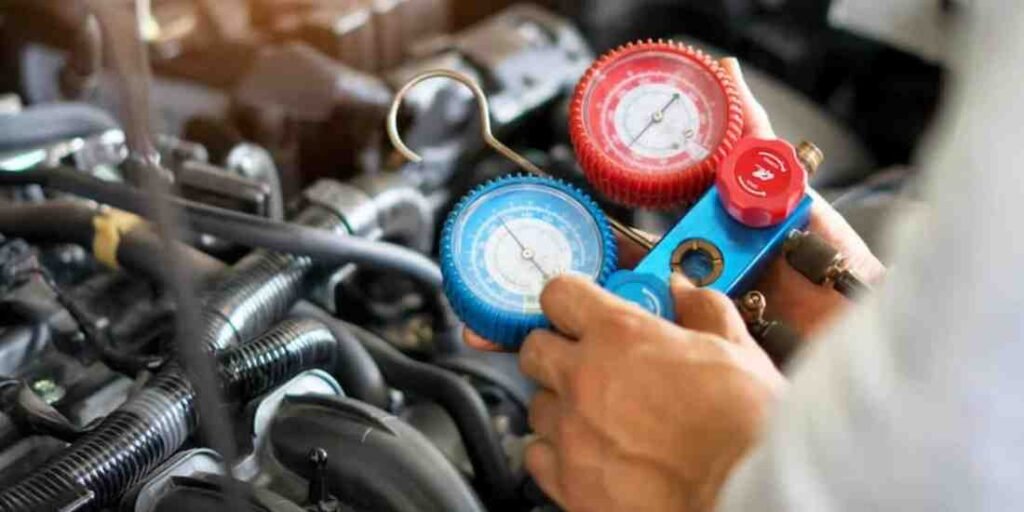
- Harbor Freight R-134a manifold gauges ($49)
- UV light + dye kit ($29)
- Infrared thermometer ($25) – vent temp should be 35–45 °F at idle on a 90 °F day
- OBD2 scanner that reads HVAC codes (Innova 5610 – $299 but worth it)
Final Reality Check
If your car is 2018 or newer and completely out of refrigerant, you almost certainly have a condenser leak. Budget $1,200–$1,800 at an independent shop. Dealer will be $2,500+. That’s just the new reality with these ultra-thin condensers.
But 85 % of the cars that roll into my shop don’t need a $2,000 repair. They need a $180 recharge + dye + evaporator cleaning + condenser wash.
Start with the cheap and easy stuff. You’ll be shocked how often that fixes it.
Got a specific year/make/model and symptom? Drop it in the comments—I answer every single one, usually within a couple hours (unless I’m under a dash).
Stay cool out there,
— Ryan Delgado
Dive deeper into expert insights and family car guides on OnlyGamify.